


Hormonal acne can be frustrating to manage because it is often influenced by factors beyond your skincare routine. Hormones, diet, stress, sleep, and lifestyle habits can all play a role in skin health. While there is no single food that guarantees clear skin, certain dietary changes may help reduce inflammation and support healthier skin over time. If you struggle with recurring breakouts, especially around your menstrual cycle, these nutrition-focused strategies may be worth considering alongside a consistent skincare routine..
Understanding Hormonal Acne
Hormonal acne is often linked to fluctuations in hormones that affect oil production in the skin. When oil production increases, pores can become clogged, creating an environment where acne develops. Many people notice breakouts around the jawline, chin, and lower cheeks, particularly during periods of hormonal change.
While diet alone does not cause hormonal acne, some foods may influence factors such as inflammation, insulin levels, and hormone activity, which can affect skin health.
Foods to Reduce or Limit
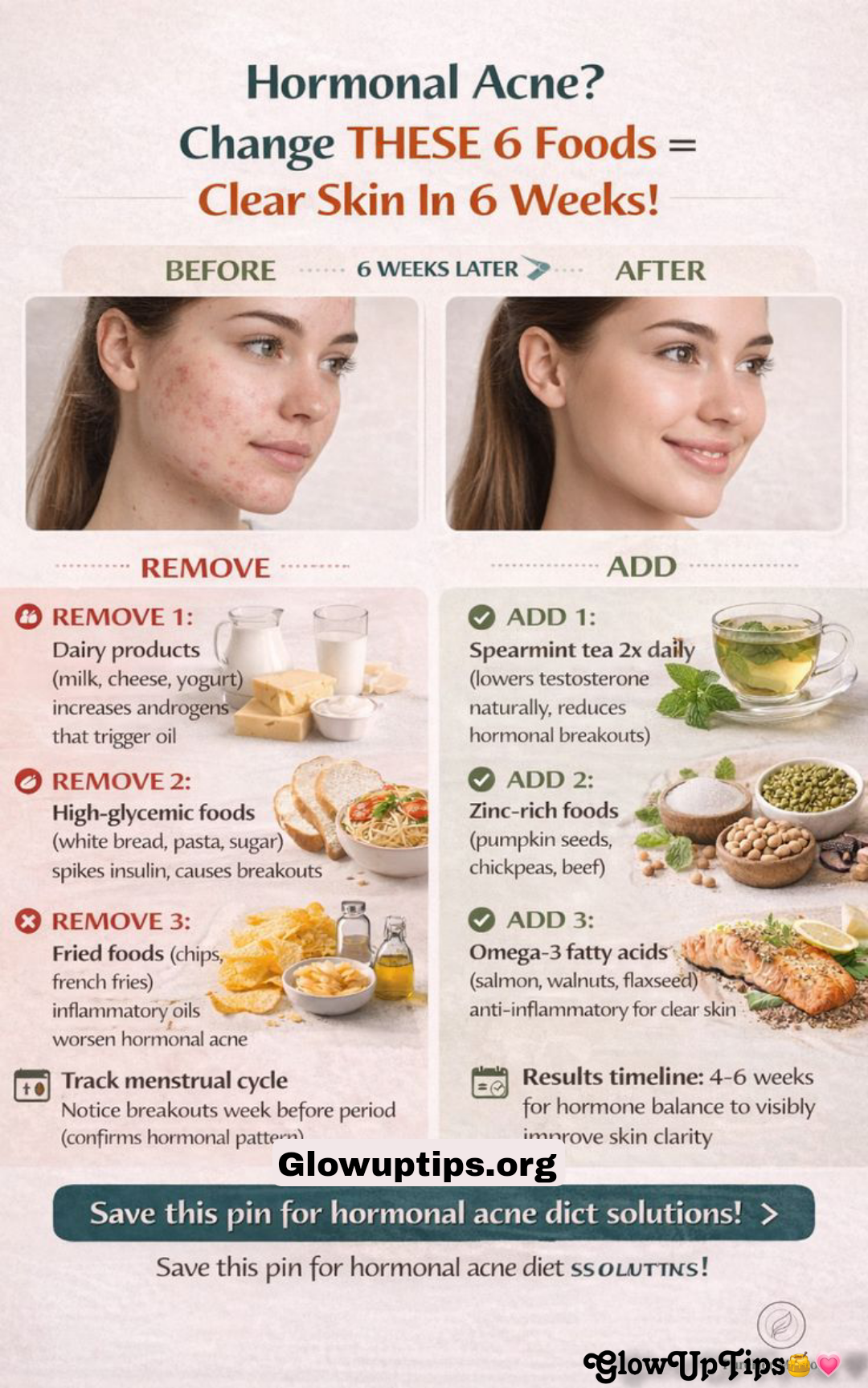
1. Dairy Products
Some studies suggest that dairy products, particularly milk, may be associated with acne in certain individuals. Dairy may influence hormone-related pathways that affect oil production and skin health.
If you suspect dairy may be contributing to your breakouts, consider reducing products such as milk, cheese, and yogurt for a period of time while monitoring changes in your skin. Keep in mind that individual responses vary, and not everyone experiences the same effects.
2. High-Glycemic Foods
Foods that cause rapid spikes in blood sugar may contribute to increased insulin levels, which can influence hormones linked to acne development. Common examples include white bread, sugary snacks, pastries, sweetened drinks, and highly refined carbohydrates.
Choosing lower-glycemic alternatives such as whole grains, vegetables, legumes, and fiber-rich foods may help support more stable blood sugar levels and overall skin health.
(getCard) #type=(post) #title=(You might Like)
3. Fried and Highly Processed Foods
Fried foods and heavily processed snacks are often high in unhealthy fats, calories, and additives. While research does not show that all fried foods directly cause acne, diets rich in highly processed foods may contribute to inflammation, which can negatively affect skin health.
Replacing these foods with whole, nutrient-dense options may support both your skin and overall well-being.
Foods and Habits to Add
4. Spearmint Tea
Spearmint tea has gained attention for its potential effects on hormones related to acne. Some small studies suggest that it may help reduce androgen activity in certain individuals, which could potentially benefit those experiencing hormonal breakouts.
Drinking spearmint tea regularly may be a simple addition to a balanced lifestyle, although results can vary from person to person.
5. Zinc-Rich Foods
Zinc is an important mineral that supports immune function, wound healing, and skin health. Some research suggests that adequate zinc intake may help support clearer skin.
Good sources of zinc include pumpkin seeds, chickpeas, beans, beef, seafood, and nuts. Including a variety of zinc-rich foods in your diet can help support overall health while potentially benefiting your skin.
6. Omega-3 Fatty Acids
Omega-3 fatty acids are known for their anti-inflammatory properties. Since inflammation can contribute to acne severity, increasing omega-3 intake may help support healthier skin.
Foods rich in omega-3s include salmon, sardines, mackerel, walnuts, chia seeds, and flaxseeds. Regular consumption can provide benefits beyond skin health, including support for heart and brain function.
(getCard) #type=(download) #title=(Full-Infographic.zip) #info=(54.82kb) #button=(Download)
Track Your Menstrual Cycle
If you regularly experience breakouts before your period, tracking your menstrual cycle can help identify patterns. Many people with hormonal acne notice flare-ups in the days leading up to menstruation. Recognizing these trends can help you better understand your skin and discuss concerns with a healthcare professional if needed.
What Results Can You Expect?
Dietary changes are rarely an overnight solution. Improvements in skin health often take time because skin cells naturally renew over several weeks. Many people who respond positively to dietary adjustments begin noticing gradual improvements within four to six weeks, although individual experiences vary significantly.
Consistency is key. Small changes maintained over time are more likely to produce meaningful results than drastic short-term diets.
Final Thoughts
Hormonal acne is influenced by many factors, including hormones, genetics, stress levels, sleep quality, and diet. While no specific food can guarantee clear skin, reducing dairy, limiting high-glycemic foods, and cutting back on heavily processed meals may help some individuals. At the same time, adding spearmint tea, zinc-rich foods, and omega-3-rich foods may provide additional support for overall skin health.
The best approach is to focus on sustainable habits, maintain a balanced diet, care for your skin consistently, and pay attention to how your body responds. Clearer skin is often the result of many small improvements working together over time.


Feel free to ask questions or just let me know if you found this useful or something else, stay glowy.....